the SoAL Game
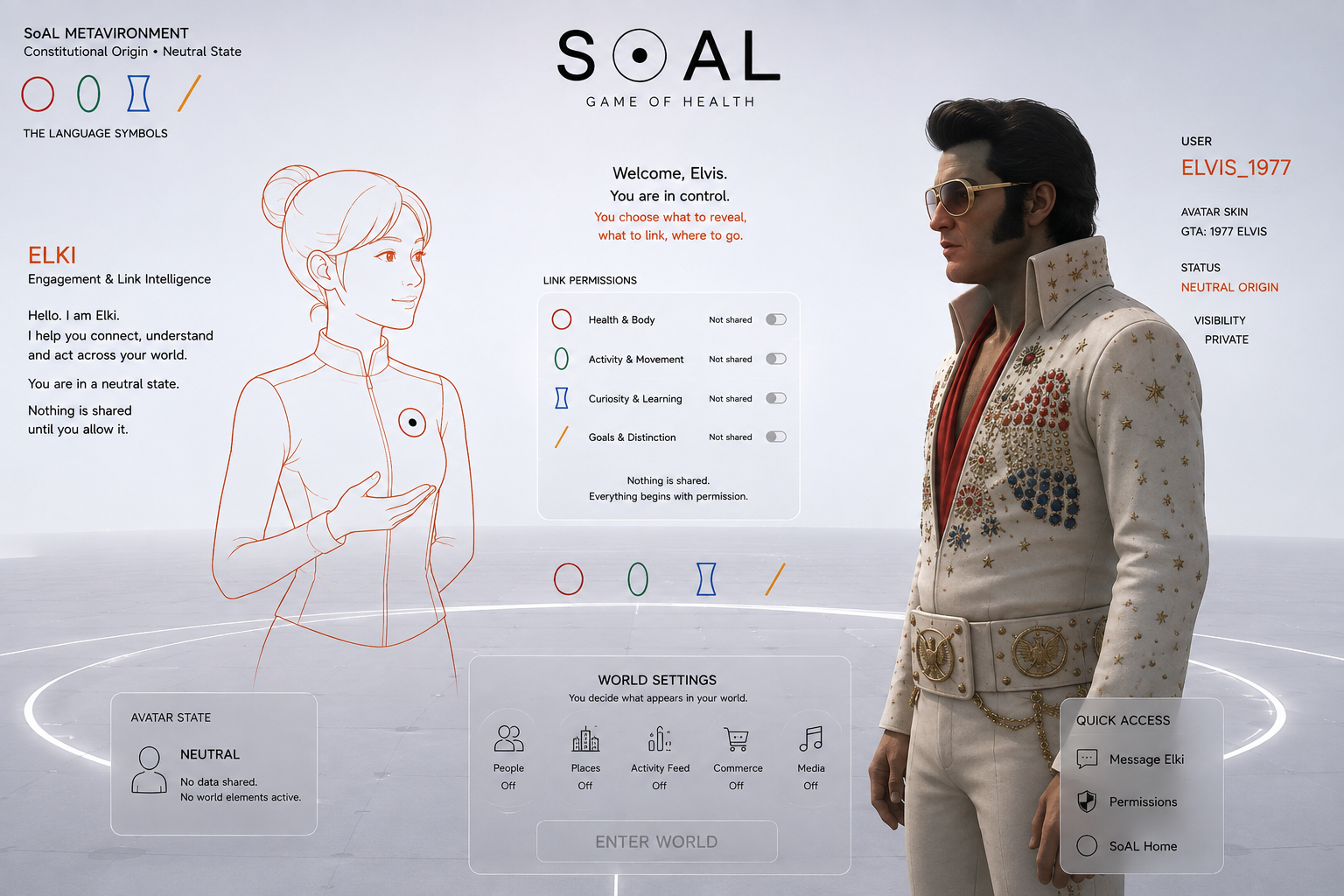
Game of Health
A Player-Permissioned Avatar Platform for Health, Behaviour, Learning and Digital Life
Executive Overview. Part of the MetaMathics creative series.
The SoAL Game of Health is a proposed gamified personal-data platform in which the real activities of an individual generate an evolving digital character within an individually chosen setting.
The proposition begins from a simple observation: people already generate large quantities of potentially useful information through healthcare encounters, wearable devices, mobile applications, exercise, education, gaming, self-report and ordinary digital activity. These records remain fragmented across institutions and platforms and are generally experienced by the individual as records about them, rather than as an intelligible resource for them.
The Game proposes to reverse that relationship.
The platform constitutes permitted information about an individual into a continuously evolving player-state represented through an avatar. The avatar becomes a controlled computational proxy through which the person's longitudinal information can be interpreted, visualised and, where expressly permitted, made analytically useful to healthcare providers, researchers, insurers, training platforms and other services.
The player does not purchase progress. Progress is acquired through data sharing. Data sharing offers opportunities to make better predictions. Better predictions offer services to users.
Points are earned only through logged activity, achievement or other admissible events recorded by the system.
Walking, training, learning, recovery, completing a programme, maintaining an agreed activity, producing self-report information or reaching a verified objective can therefore contribute to an internal game budget. Money cannot buy that budget. Not by philosophy or commercial decision but by fact that financial data does not fit its ingestion format. Its ingestion format is historical permission-data.
The commercial model is separate. Revenue arises from organisations licensing permissioned analytical services, integrations and insights generated from participating users' data and used for the participant’s benefit as part of the mutual contract as currently agreeable.
The resulting proposition is:
Turn the data a person already generates into a permissioned, playable digital state that rewards real activity with insights and makes richer longitudinal information useful without requiring every participating platform to possess the underlying personal record.
The player plays with the representation.
The platform governs the data allocation relative to user-guided temporarily-granted access.
Authorised institutions gain access only to the representations, calculations or information products that the individual and applicable legal framework permit them to receive.
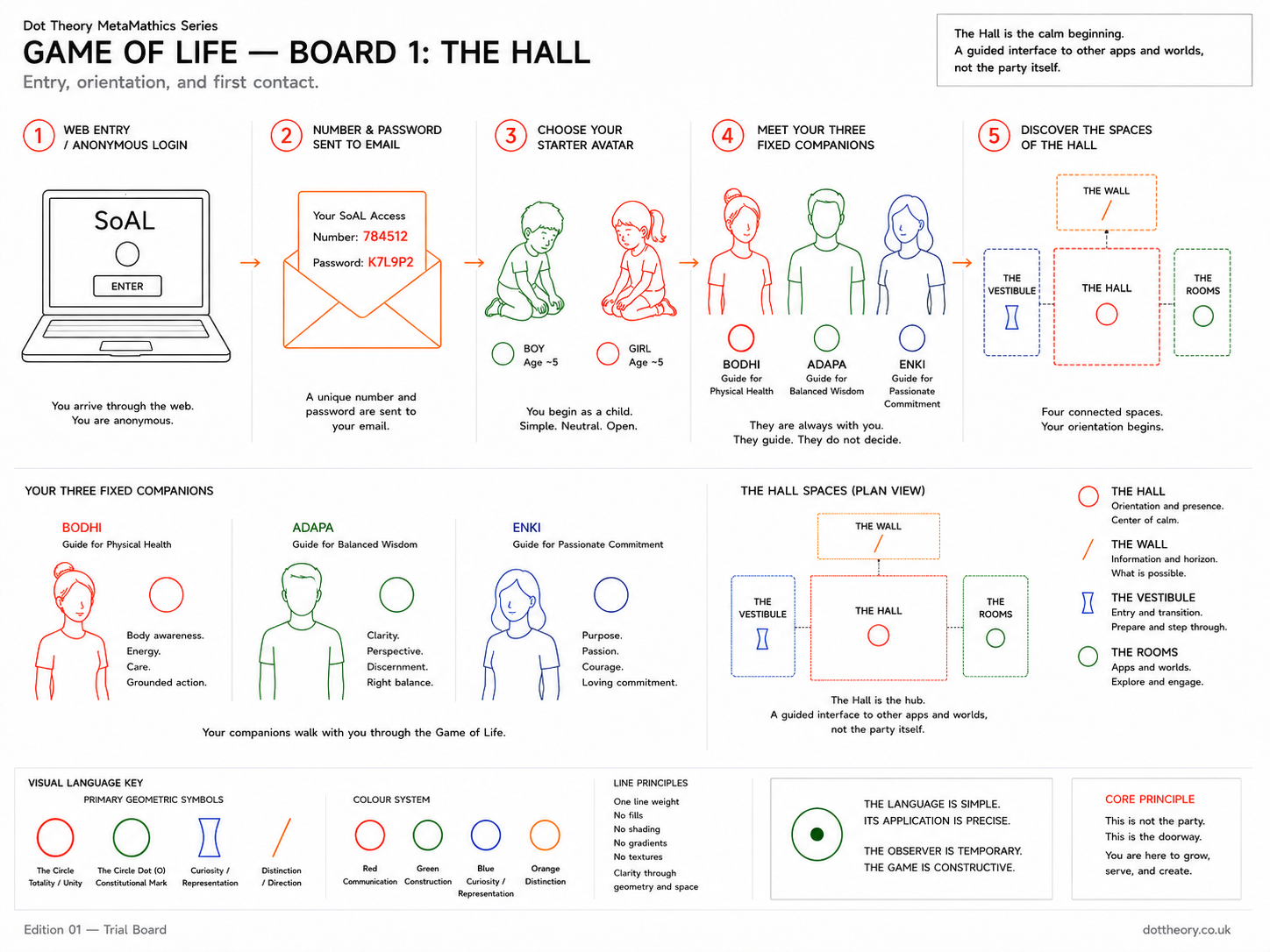
1. The Player and the Three Fixed Characters as interface
The player occupies the centre of The SoAL Game.
In an otherwise sparse VR background, three persistent characters accompany the player irrespective of the historical, cultural or visual register through which the player chooses to represent themselves.
Bodhi — Physical Health
Bodhi represents the embodied condition of the player: physical health, movement, recovery, sleep, nutrition, training, physiological information and relevant healthcare observations.
Bodhi asks:
What is happening to the body?
Adapa — Balanced Wisdom and Collaborative Good
Adapa represents judgement: understanding consequences, balancing interests, learning, cooperation, contextual intelligence and the relationship between individual objectives and the wider world.
Adapa asks:
What is the wise thing to do, given what is known?
Enki — Passionate Commitment
Enki represents aspiration, determination, creativity, effort and commitment to an undertaking.
Enki asks:
What are you prepared to pursue?
These three characters need not agree.
An ambitious training schedule might therefore cause Enki to encourage greater commitment while Bodhi identifies declining recovery and Adapa asks whether the objective remains proportionate. Your counsel is their data.
The platform does not need to reduce human life to a single universal health or virtue score.
Its game dynamic arises partly from negotiating these competing readings with the user.
2. The Avatar Is Not the Individual
At the centre of the technical proposition is a deliberate separation between:
Person → constituted player-state → avatar → authorised external representation
The private player-state may contain or derive from data such as:
login type (source of entry);
healthcare records (established user);
wearable data log;
exercise and training information;
self-report (app API);
nutrition (logs/diaries);
educational activity;
gaming activity;
contextual declarations (avatar-interaction);
selected social or application activity (self-report);
environmental observations;
historical events and achievements (internet data/AI).
Not every source need be given or present at all. The SoAL Game can be entered, played and exited anonymously.
Not every source has equal evidential status.
And the existence of information within the player-state does not automatically authorise its disclosure or use elsewhere.
The avatar is therefore a governed computational representation of the player-state, rather than the player-state itself.
Different applications can receive different permissible projections of that representation by active decision-making process (active consent).
A healthcare provider may therefore be authorised to receive clinically relevant longitudinal information.
A training application may receive physical-performance information.
A game may receive earned characteristics and cosmetic attributes to construct that digital twin.
A social platform may receive only the avatar's chosen public appearance and achievements.
The underlying record does not need to travel with each representation.
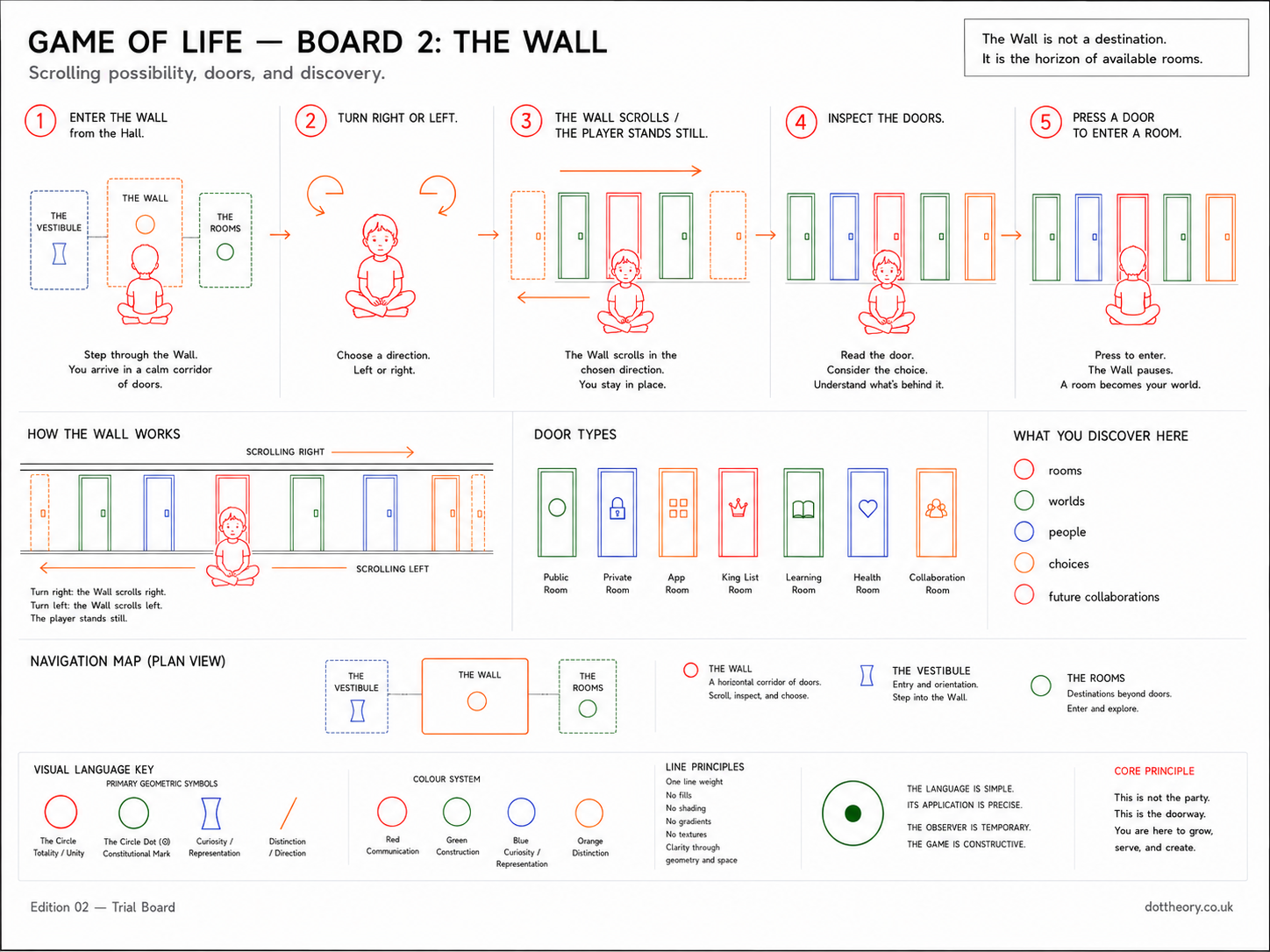
3. The Skin as a Capability Object
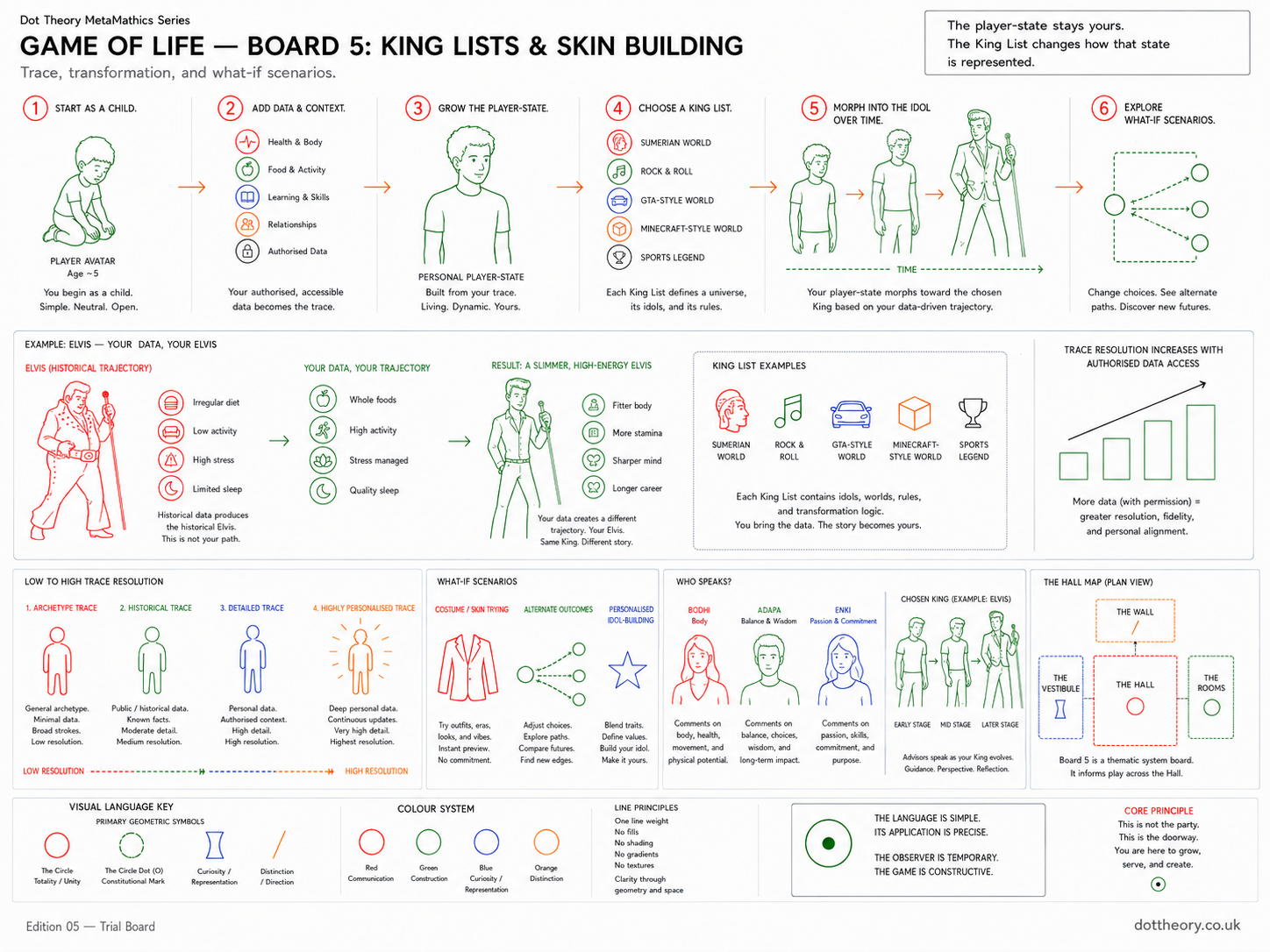
A skin is more than a game-earned cosmetic costume.
Within the SoAL Game it represents an earned or selected interface between the underlying player-state and a particular cultural or visual world.
Technically, the skin can be cryptographically bound to permissions, provenance, player-state and representational rules without itself being the underlying cryptographic master key.
A player might therefore possess simultaneously:
a private skin;
a public skin;
a clinical representation;
a gaming representation;
a social-media representation;
multiple historical or cultural avatars.
Each is derived from the same evolving player-state but carries different disclosure rights and different representational consequences.
A skin can therefore effectively state:
This is the representation of me that this environment is presently entitled to encounter.
Changing or revoking a skin does not destroy the underlying longitudinal record.
4. The King List
The game uses the idea of a King List as a library of aspirational and historical representational trajectories.
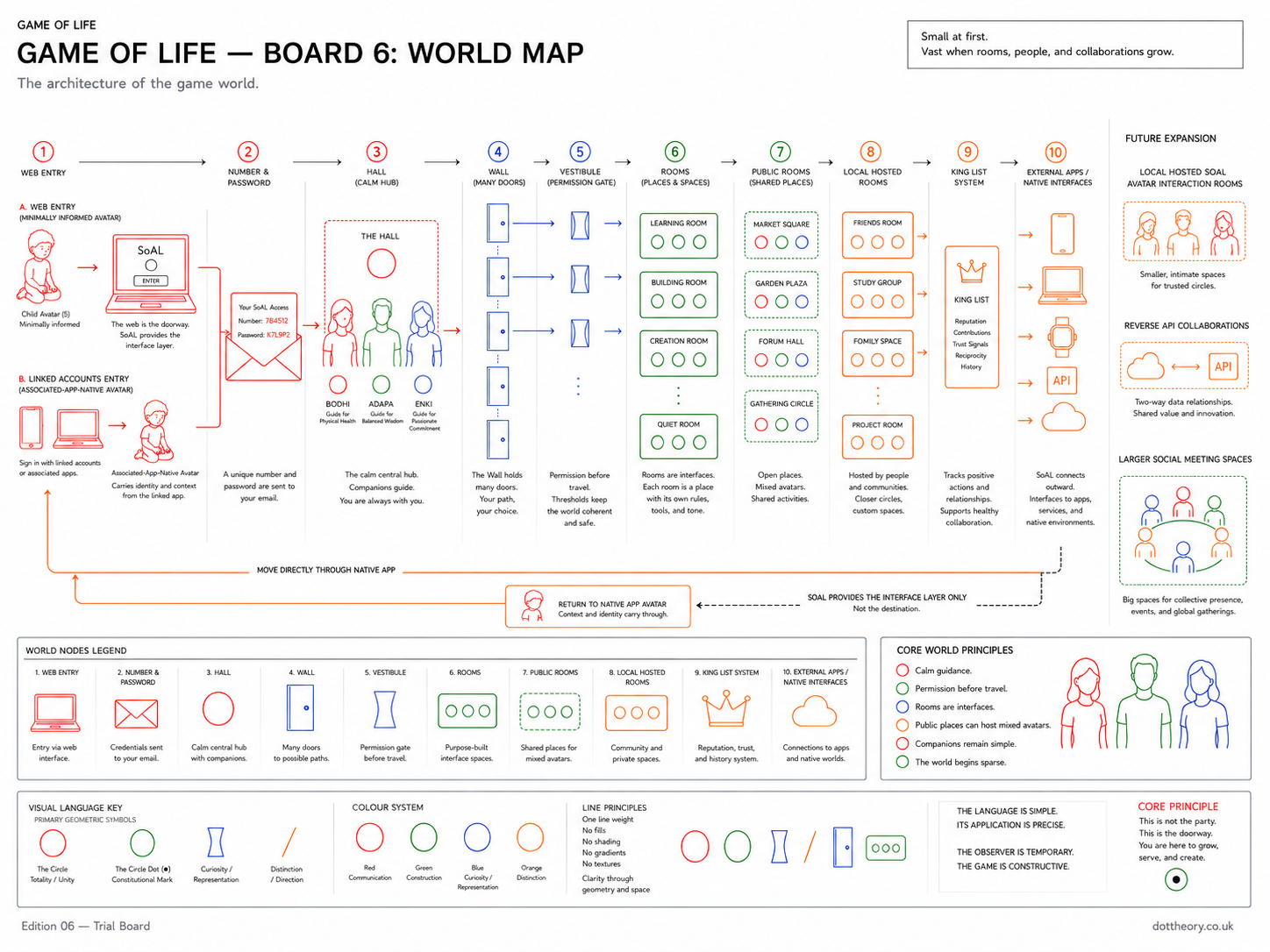
A King List need not be limited to literal kings.
Its members can occupy different cultural registers:
Mesopotamian ruler → philosopher → athlete → artist → rock-and-roll icon → cultural figure → fictional or future archetype.
The distinctive feature is that the sophistication of a skin depends upon the density and quality of the trace from which it can legitimately be constructed.
An ancient ruler might permit only a comparatively broad historical reconstruction.
A heavily documented modern cultural figure could permit a substantially richer trajectory and digital rendering library.
A licensed living figure might provide an even more detailed authorised model.
The system therefore moves from low-resolution archetype towards high-resolution individual trace according to the admissible information available.
It should not claim that the entire life of a historical person is known. Instead, the available trace determines the resolution of the model.
Commercial use of modern personalities would require a deliberate licensing strategy. UK law provides several mechanisms relevant to names, images, trade marks, copyright and associated commercial interests; the UK government has specifically noted that aspects of personal identity can themselves be protected through trade marks.
An initial catalogue could therefore distinguish between public-domain historical archetypes, original Game of Life characters and separately licensed contemporary figures.
5. Historical Trajectory as Game Mechanic
Selecting a King List character does not merely change appearance.
It selects a representational trajectory.
Suppose, for example, a player chooses an Elvis-like rock-and-roll king.
The player's real behaviour then changes that representation.
Activity, diet, weight, training, sleep and other permitted variables can affect the evolving avatar.
The cultural trajectory provides an intelligible narrative language through which consequences can be represented.
The game must distinguish carefully between:
observed fact → inferred state → predictive model → historical analogy → fictional game consequence.
It must therefore never imply that following some isolated behaviour of a historical figure will medically reproduce that individual's outcome.
Instead, the game might tell the player:
You chose the King. Your current trajectory is constructing late-period King.
The visual body changes.
Performance characteristics change.
Bodhi responds.
Adapa may question the trajectory.
Enki may respond to the player's continuing objective.
The result is an unusually direct form of interactive health communication: numbers become consequences occurring to a character the player has deliberately chosen to construct.
6. The Earned Budget
The internal game economy is based upon a non-purchasable activity budget.
Points can be generated by admissible, logged events.
Examples could include:
movement;
exercise;
completing training;
recovery;
sleep objectives;
education;
learning;
rehabilitation activity;
verified achievement;
completing agreed healthcare activities;
useful self-report;
longitudinal participation;
contextual objectives;
creative or collaborative achievements.
The precise weighting system would require research and validation.
Crucially:
points cannot be purchased.
Financial wealth therefore cannot directly purchase character development.
Nor should illness simply impoverish the character.
A person living with substantial disease may demonstrate extraordinary persistence, adaptation, knowledge, rehabilitation, collaboration or commitment. Game development should recognise lived activity and achievement rather than equating physiological normality with human value.
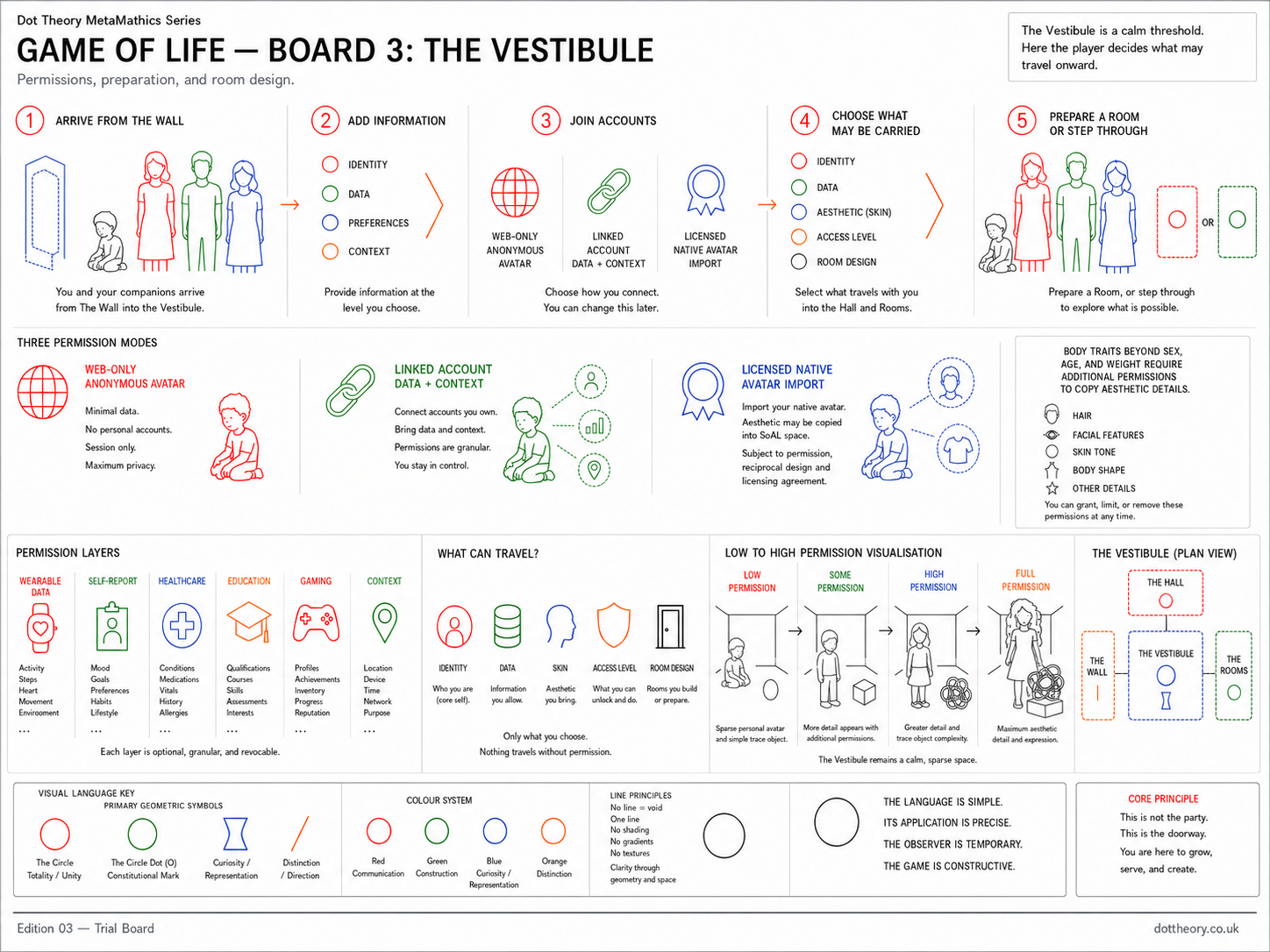
7. The Commercial Model
The SoAL Game contains two deliberately separate economies.
Player economy
The player earns:
activity → evidence → points → capability → avatar development.
Commercial economy
The company earns:
permission → analysis → institutional utility → licence/service revenue.
Potential customers and partners include:
healthcare providers;
insurers;
rehabilitation organisations;
sports and training providers;
employers operating appropriate voluntary wellbeing programmes;
education platforms;
research organisations;
gaming platforms;
social-media platforms;
wearable and health-technology companies.
The commercial asset is not merely possession of a large personal-data repository.
The more defensible asset is the combination of:
longitudinal data + permission architecture + provenance + player engagement + translation engine + analytical models + interoperable avatar representations.
The platform therefore sells analytical capability and integration rather than making raw-data brokerage its central business model.
8. Why Healthcare Providers Participate
Clinical information is often episodic.
A clinician may encounter a patient for a short appointment while the person's actual life unfolds continuously between appointments.
With appropriate permissions, the SoAL Game can incorporate longitudinal information generated outside the clinic and turn it into structured representations that help make selected aspects of that period inspectable.
Healthcare providers could therefore potentially gain a richer contextual picture of:
activity;
recovery;
adherence;
symptoms;
sleep;
self-report;
training;
relevant behavioural trajectories;
change over time.
The proposition is not to replace clinical judgement.
It is to increase the information available to it.
NHS interoperability infrastructure already uses standards including FHIR for exchanging healthcare information between systems, providing a plausible technical route for future integration rather than requiring the SoAL Game to invent an entirely proprietary healthcare exchange standard.
Where software begins performing functions intended for medical purposes or contributes to clinical decision-making, the relevant medical-device regime must be considered. The MHRA currently regulates software applications that qualify as medical devices in Great Britain, while the FDA separately distinguishes between certain non-device clinical decision-support functions and software functions subject to device regulation in the United States.
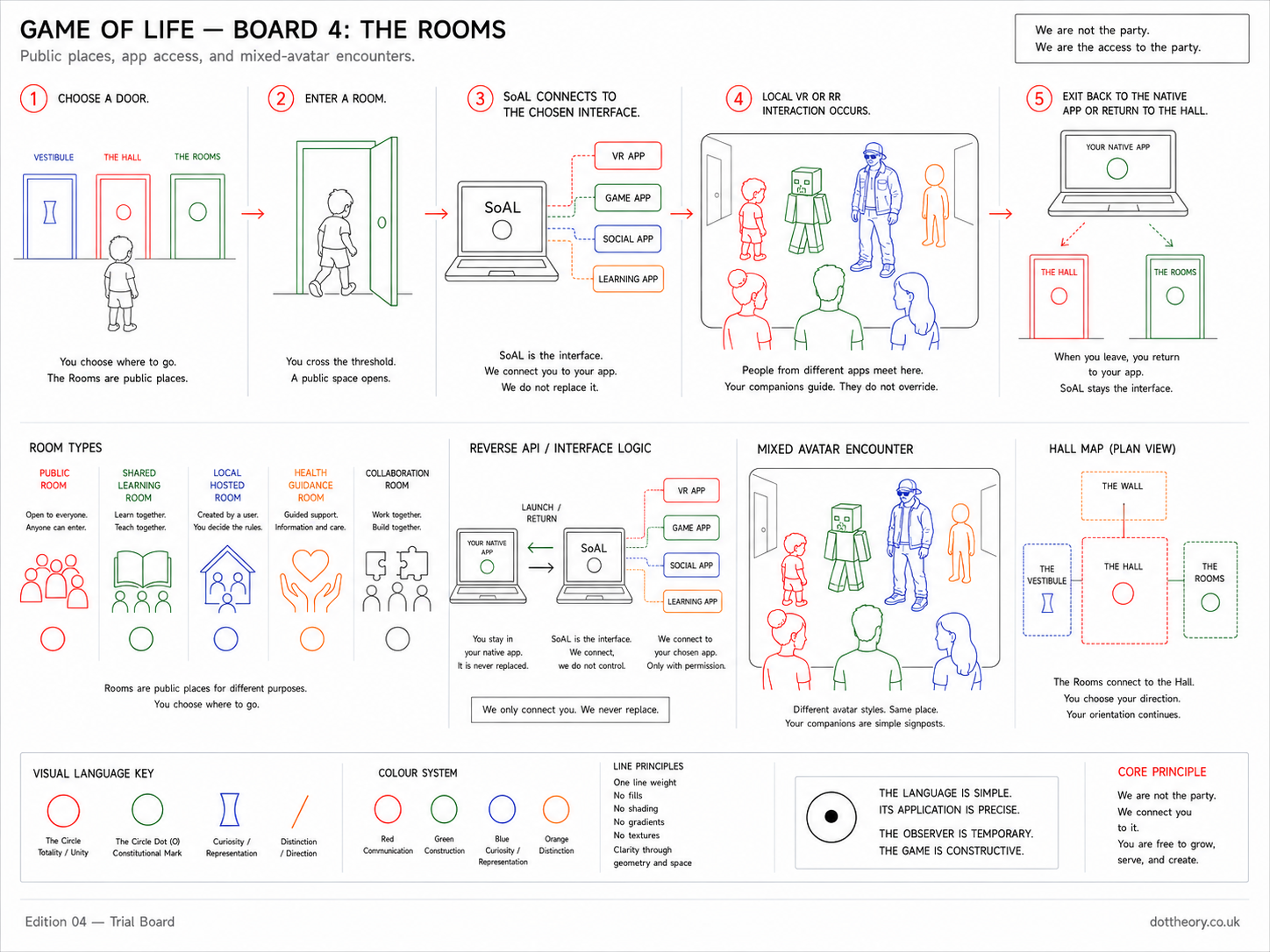
9. Why Insurers Participate
The long-term insurer proposition is preventive rather than simply actuarial.
If better information, engagement and earlier intervention help participating users maintain health or identify deteriorating trajectories earlier, insurers may benefit from lower downstream costs.
Game of Life can potentially provide the engagement layer through which users are willing to generate and authorise information that conventional insurance interfaces struggle to obtain.
However, insurance creates an important constitutional boundary.
The same information that can help an insurer fund prevention can also potentially be used to change premiums, eligibility or treatment of an individual.
These should not be treated as the same permission.
The initial commercial proposition should therefore strongly favour:
prevention, support, programme evaluation and user-authorised intervention
over invisible or compulsory underwriting surveillance.
If underwriting use is ever introduced, it should exist as a distinct and explicit permission regime.
Health information receives special protection under UK data law, and significant automated decisions involving special-category information remain subject to stronger safeguards. Insurance also operates within equality-law constraints.
Protecting that distinction is not merely regulatory hygiene.
It is central to user trust.
10. The Avatar as Analytical Boundary
One of the platform's central innovations is that institutional analysis can be performed about the constituted avatar state rather than requiring every external party to ingest a directly identifiable copy of the person's underlying dataset.
This does not make the analysis legally anonymous where the avatar remains linkable to an identifiable individual.
It does, however, create a powerful engineering and governance boundary.
An authorised organisation might ask:
Has this avatar's activity trajectory materially changed?
without receiving the raw location history from which that conclusion was derived.
Or:
Is the rehabilitation trajectory consistent with the programme objective?
without receiving every unrelated element of the player's private record.
Or:
What intervention categories appear relevant?
without obtaining the player's complete behavioural history.
The system therefore permits a transition from:
give institution data
towards:
permit institution to ask an authorised question of a governed representation.
This is potentially one of the platform's most important commercial differentiators.
11. Permission as Product Architecture
Permission should not be a legal document added after the software has been built.
It is part of the product.
For every meaningful representational transition, the system should be capable of recording:
what information entered → where it came from → what it may be used for → which transformation occurred → what was derived → which party may receive the result → for how long → under what conditions → whether the entitlement was subsequently revoked.
This makes data governance visible as interaction.
A person adding a wearable does not merely press Accept.
They are adding a new observational capability to their character.
Authorising a clinician is not merely accepting a privacy notice.
They are granting a particular observer access to a defined representation.
Revoking a platform removes that platform's entitlement without requiring the player's accumulated character history to disappear.
This is where Constitutional Physics ceases to be merely an intellectual provenance for the SoAL Game and becomes an implementable design discipline.
12. Data Protection Architecture
The SoAL Game should be designed on the assumption that user-linked health and behavioural information remains regulated personal data even where pseudonyms, avatars or cryptographic identifiers replace ordinary names.
ICO guidance explicitly distinguishes pseudonymisation from anonymisation: pseudonymised information remains personal data where additional information permits attribution to the person.
That suggests a technical architecture based upon:
data minimisation;
purpose limitation;
separated identity and analytical stores;
pseudonymous computational identifiers;
cryptographically recorded permissions;
revocable capabilities;
auditable transformations;
minimal external disclosure;
genuine anonymisation where individual identification is unnecessary.
In the United States, HIPAA applies in defined relationships involving covered entities and business associates rather than automatically to every consumer application. Where the SoAL Game performs functions involving protected health information on behalf of a covered entity, business-associate obligations may arise. HHS also recognises defined methods for HIPAA de-identification.
The platform should therefore be built for jurisdiction-specific permissions rather than treating “HIPAA compliant” or “GDPR compliant” as a universal product attribute.
13. Cross-Platform Identity
The same constituted player can operate across multiple digital environments without granting those environments identical access.
For example:
Game of Life private state
↓
Xbox capability
earned skin + selected attributes + achievements
Social capability
public appearance + public status + approved achievements
Training capability
performance state + training objectives
Healthcare capability
clinically relevant longitudinal representation
The third-party platform receives what it needs for the authorised interaction rather than automatically acquiring the complete underlying record.
The skin becomes a portable but bounded representation of identity.
14. The Strategic Flywheel
The platform has the potential to create a mutually reinforcing cycle:
More useful game
→ greater voluntary engagement
Greater engagement
→ richer longitudinal player record
Richer record
→ better personal representation
Better representation
→ more useful permitted analysis
More useful analysis
→ greater institutional value
Institutional value
→ commercial revenue and integration
Better integrations
→ more useful game.
The critical element is that institutional value must not be allowed to destroy the user trust responsible for creating the information in the first place.
The user therefore remains an active constitutional participant rather than merely becoming the object being monetised.
15. Initial Product Strategy
The full vision should not be attempted simultaneously.
Phase I — Playable World
Build Bodhi, Adapa and Enki.
Use synthetic and manually entered information.
Demonstrate:
earned points;
changing avatar state;
neutral and earned skins;
one historical register;
one modern register;
travel between them;
persistence of player-state.
Phase II — Personal Data
Integrate consumer wearable information and structured self-report.
Introduce:
provenance;
permissions;
revocation;
longitudinal state;
player-controlled disclosure.
Phase III — Health and Training Demonstrator
Develop a bounded health/training application in collaboration with appropriate clinical and regulatory expertise.
Demonstrate that additional longitudinal observations can enrich a conventional episodic picture without claiming to replace professional judgement.
Phase IV — Institutional Sandbox
Allow a selected healthcare, research, training or insurance partner to query strictly bounded avatar-derived information under explicit participant consent.
Test whether the architecture produces useful information while exposing materially less underlying personal data.
Phase V — Interoperable Avatar
Enable selected third-party games and digital platforms to consume portable Game of Life capabilities and representations.
Phase VI — Expanded King Lists
Develop licensed cultural, sporting, historical and artistic registers through which the same underlying player-state can be represented differently.
16. Why This Is Not Simply Another Health App
Conventional health applications generally begin with a particular function:
count activity.
track diet.
manage disease.
display records.
coach exercise.
The SoAL Game begins somewhere different.
It asks:
How can the continuously generated evidence of a person's life be constituted into something that the person can inhabit, understand, develop and selectively allow others to use, without tying back to private personal information?
Healthcare is one application.
Training is another.
Education is another.
Gaming and social identity are others.
The persistent object is the player-state.
The avatar is its locally admissible representation.
The skin governs how that representation becomes visible.
Bodhi, Adapa and Enki provide continuity.
The King Lists provide culturally intelligible spaces through which the player can explore alternative trajectories.
And the underlying permission architecture determines what any observer is entitled to know.
Core Proposition
Game of Life converts permissioned personal data into an evolving playable identity.
Players cannot buy progress. They earn it by living, learning, acting and generating admissible evidence to build their avatar.
Their data refines the character they construct. They can withhold, they can lie, they can share, they can achieve their set goals.
Historical and cultural King Lists provide alternative trajectories through which that evolving state can be experienced.
Healthcare and other authorised organisations can obtain better contextual insight through the avatar without automatically receiving the complete underlying record.
The business earns from the value created by those permissioned analytical relationships comissioned from the relationship between patient and healthcare provider or insurer.
The player earns the character.
The data makes the avatar richer.
The avatar makes the data intelligible and useful for predictions.
Permission determines who else gets to see what it means.
Efficiency earns its place.